Showing posts with label wildebeest. Show all posts

Wednesday, December 5, 2012

U is for Ungulate


Because I was stumped on what to use for the letter 'U' today, I'm reprising information used in an earlier post about our amazing African trip...
Note: I will be away this week but will most certainly respond to comments when I return...thanks for stopping by!
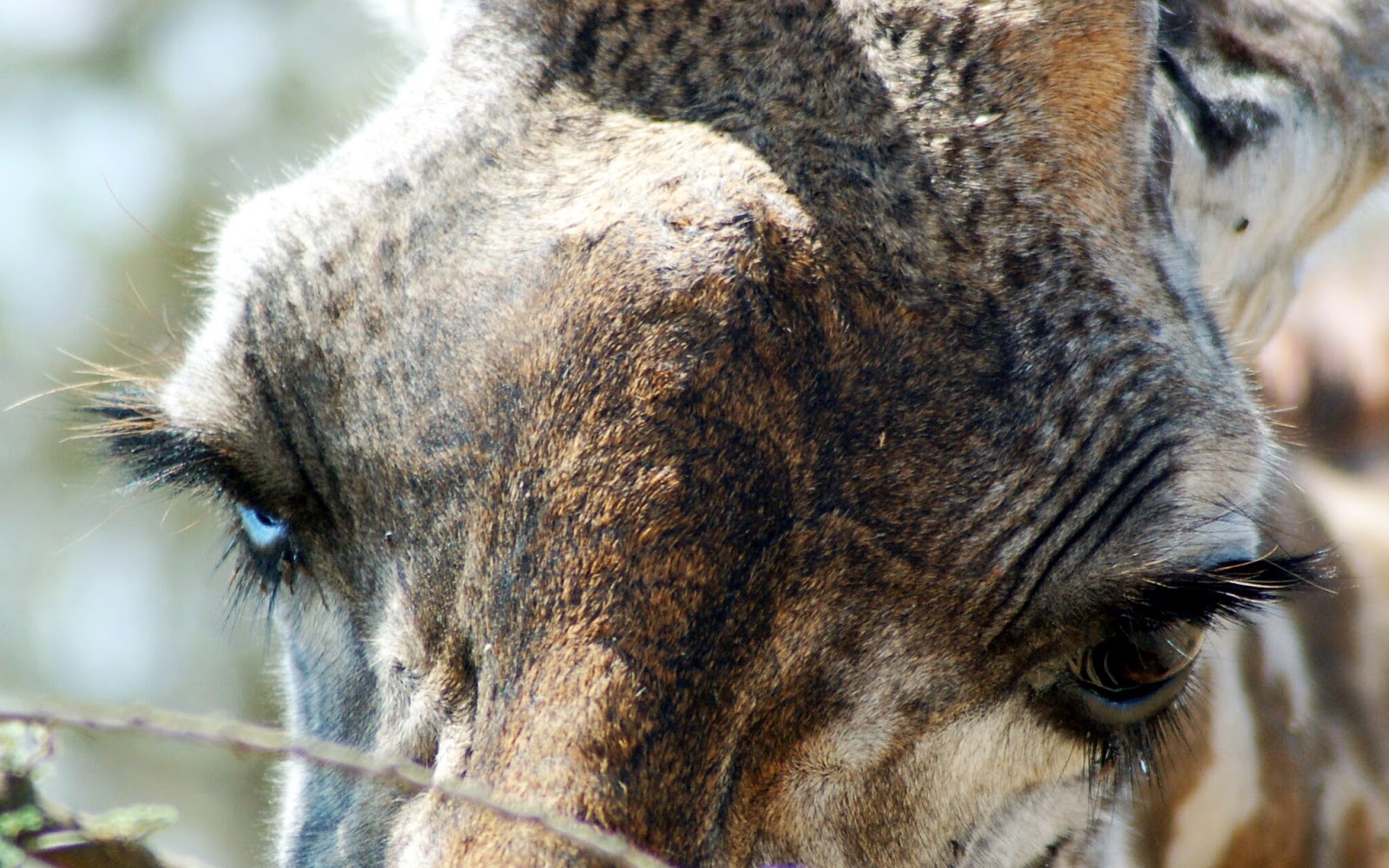
Masai Giraffe

 Ungulate” refers to any animal with hooves. Ungulates are the grazers and browsers of the world, accounting for the majority of herbivores currently on earth.

Africa’s list of ungulates is longer than in any other continent and East Africa is particularly noted for its diversity and abundance of these mammals. 
 Common Zebra


Unfortunately, a fair number of these species are also threatened or endangered.

Grevy's Zebra with Antelope

 Wildebeest Herd

In areas where rainfall is scattered and seasonal,  animals must travel great distances to satisfy their nutritional needs....
 Young Zebra with Cape Buffalo

The end of the rainy season in May results in the annual Great Migration of wildebeest and other herbivores, as great herds of animals cross north from the parched Serengeti, across the Mara River and into the Masai Mara Reserve in search of food and water.  
 It is thought that one-and-a-half million wildebeest take part in this migration along with hundreds-of-thousands of zebra and gazelle.

Complementary grazers preferring different parts of the same grass, Plains zebra and wildebeest often travel together. 
 Zebras, with their superior vision and hearing, serve as an early warning system for the wildebeest…and given the choice, predators prefer wildebeest meat to zebra, so zebras  can find safety in their midst.

Ungulates have always been important to humans all over the world. We've hunted them...domesticated them to provide us with food, fibre, transportation and a variety of other things.

In many cases, we've also pushed them to the point of extinction. 
 Wildebeest frolicking...


This puts more at risk than the animals. Locals depend on the tourism that drives the economy in East Africa.

Studies reveal that 60% of the large mammals in protected areas- lions, cheetahs, leopards, zebras, rhinos, and wildebeest - have been lost in the last two to three decades alone.

 Quite simply,
there is no more time to lose is we are to preserve the magnificent and diverse population of the African savanna...
White Rhinoceros

Please stop by ABC Wednesday for more takes on the letter "U"...

http://abcwednesday-mrsnesbitt.blogspot.ca/


Wednesday, October 31, 2012

P is for Photography


"The camera is an instrument that teaches people how to see without a camera".

Dorothea Lange
Photographer/photojournalist 1895 - 1965
.

I see my world through the photographs I make of it. Here are a few of my African favourites...

Desert Rose, Kenya

Elephants at Baobab tree, Tanzania
   
 Wildebeest, Masai Mara Game Reserve, Kenya

Cheetah, Masai Mara Game Reserve, Kenya

Agama Lizard, Masai Mara Game Reserve, Kenya

                      Rim of the Ngorongoro Crater, Tanzania
Giraffe, Masai Mara Game Reserve, Kenya

Gerenuk, Serengeti Plain, Tanzania

                            Young lion, Serengeti Plain, Tanzania

Masai village children, Kenya


I am linking this post to ABC Wednesday, and suggest you drop by and check out other takes on the letter'P'...


.


Wednesday, April 27, 2011

The A - Z April Challenge: W

W is for Warthog
.
.
Common Warthogs are not considered the most aesthetically pleasing animals in Africa. Mostly bald, they have large flat heads sporting “warts”, which are actually four large bumps serving as protection. Along with their two sets of tusks -one set curved, one straight- wart-hogs are ferocious-looking creatures indeed.
.
Despite their appearance, these fellows are herbivores, spending their days grazing on the savannah, and choosing to flee rather than fight if a situation arises. Nonetheless, they are capable of inflicting great damage with those tusks when they choose to take a stand.
.
Their main predators are humans, lions, leopards and crocodiles. Current warthog numbers insure they’re not on the endangered list but human hunting continues to do great damage to scattered groups.
.
.
W is also for Wildebeest
.
The Blue Wildebeest, also known as the Gnu, inhabits plains and open woodlands, and can be found in great numbers in Tanzania’s Serengeti National Park and Kenya’s Masai Mara Game Reserve.

.

The Serengeti herds are migratory and abandon the plains after the rainy season has ended to seek fresh grass in wetter areas. Beginning in May, more than a million wildebeest migrate over 800 miles north from the Serengeti, across the Mara River, and onto the open grasslands of the Masai Mara to feed until November, at which time they head south again.
Wildebeest numbers remain high, but thousands die each year during the long migration, and their many predators definitely keep the herds in check.

 We were much taken with the wildebeests. Given their large size and stern demeanor, these animals surprised us with their boisterous natures, seeming to run and frolic for the simple joy of it as they kicked up dust and barked loudly to one another.
.
.
.
 I suspect some of it was to impress females, and some to establish dominance in the herd, but there seemed such celebration in their antics that it left us grinning for hours afterwards
.

For more A - Z posts, be sure to pop by Arlee Bird's site and see what others have done with the letter W...
http://www.tossingitout.blogspot.com/2011/01/very-special-and-exciting

Sunday, April 24, 2011

The A - Z April Challenge: U

U is for Ungulate
.
Wildebeest and Zebra
.
“Ungulate” refers to any animal with hooves. Ungulates are the grazers and browsers of the world, accounting for the majority of herbivores currently on earth. Africa’s list of ungulates is longer than in any other continent and East Africa is particularly noted for its diversity and abundance of these mammals. Unfortunately, a fair number of these species are also threatened or endangered.
.
  In areas where rainfall is scattered and seasonal,  animals must travel great distances to satisfy their nutritional needs....Zebra with Impala

Zebra foal with Cape Buffalo

 The end of the rainy season in May results in the annual Great Migration of wildebeest and other herbivores, as great herds of animals cross north from the parched Serengeti, across the Mara River and into the Masai Mara Reserve in search of food and water.  It is thought that one-and-a-half million wildebeest take part in this migration along with hundreds-of-thousands of zebra and gazelle.


Complementary grazers preferring different parts of the same grass, Plains zebra and wildebeest often travel together. Zebras, with their superior vision and hearing, serve as an early warning system for the wildebeest…and given the choice, predators prefer wildebeest meat to zebra, so zebras  can find safety in their midst.
.
Ungulates have always been important to humans all over the world. We've hunted them...domesticated them to provide us with food, fibre, transportation and a variety of other things. In many cases, we've also pushed them to the point of extinction.
.
This puts more at risk than the animals. Locals depend on the tourism that drives the economy in East Africa. Studies reveal that 60% of the large mammals in protected areas- lions, cheetahs, leopards, zebras, rhinos, and wildebeest - have been lost in the last two to three decades alone. Quite simply,
there is no more time to lose...
.
For more A - Z posts, be sure to pop by Arlee Bird's site and see what others have done with the letter U...
.
http://www.tossingitout.blogspot.com/2011/01/very-special-and-exciting
.