Showing posts with label giraffes. Show all posts

Wednesday, December 5, 2012

U is for Ungulate


Because I was stumped on what to use for the letter 'U' today, I'm reprising information used in an earlier post about our amazing African trip...
Note: I will be away this week but will most certainly respond to comments when I return...thanks for stopping by!
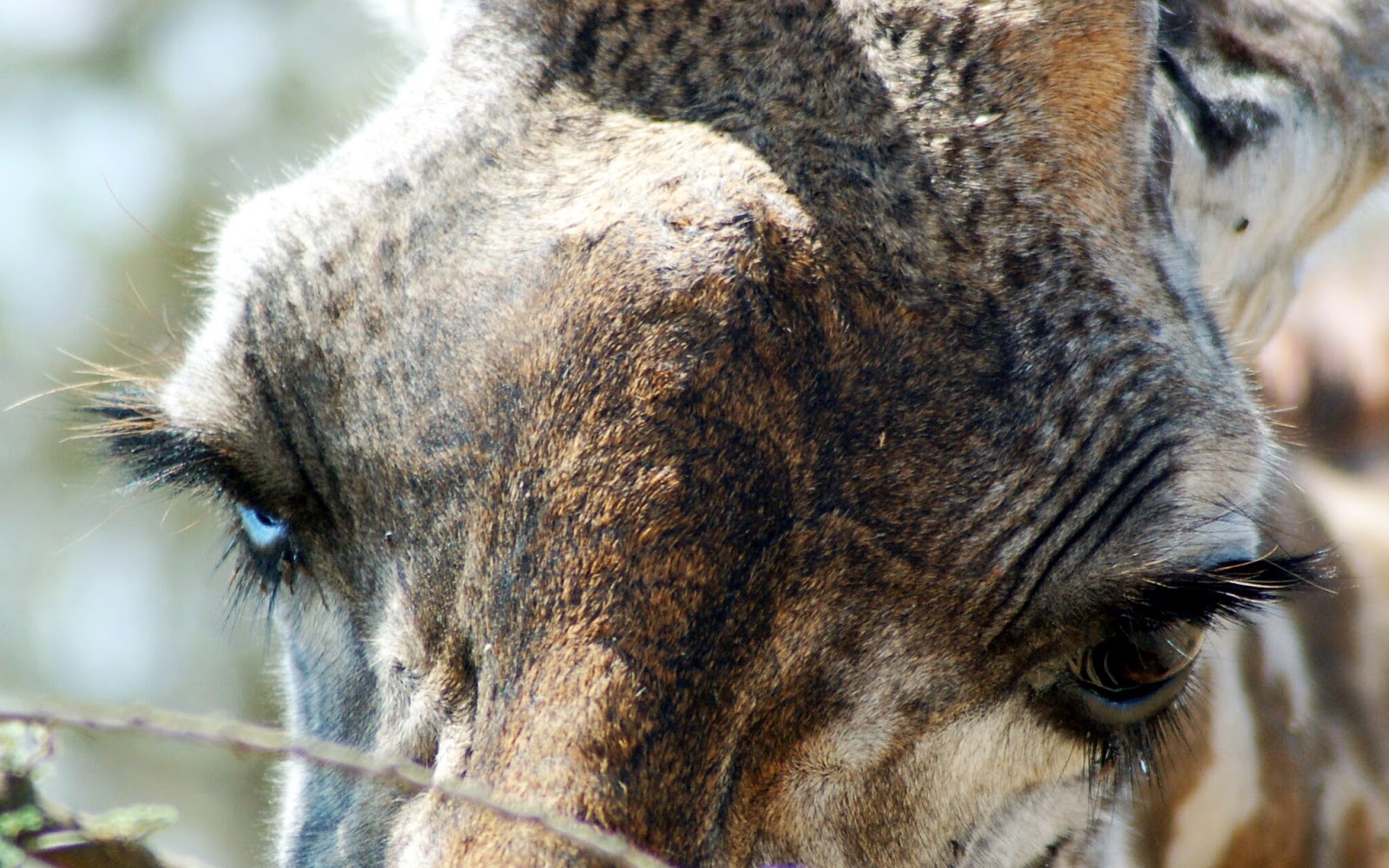
Masai Giraffe

 Ungulate” refers to any animal with hooves. Ungulates are the grazers and browsers of the world, accounting for the majority of herbivores currently on earth.

Africa’s list of ungulates is longer than in any other continent and East Africa is particularly noted for its diversity and abundance of these mammals. 
 Common Zebra


Unfortunately, a fair number of these species are also threatened or endangered.

Grevy's Zebra with Antelope

 Wildebeest Herd

In areas where rainfall is scattered and seasonal,  animals must travel great distances to satisfy their nutritional needs....
 Young Zebra with Cape Buffalo

The end of the rainy season in May results in the annual Great Migration of wildebeest and other herbivores, as great herds of animals cross north from the parched Serengeti, across the Mara River and into the Masai Mara Reserve in search of food and water.  
 It is thought that one-and-a-half million wildebeest take part in this migration along with hundreds-of-thousands of zebra and gazelle.

Complementary grazers preferring different parts of the same grass, Plains zebra and wildebeest often travel together. 
 Zebras, with their superior vision and hearing, serve as an early warning system for the wildebeest…and given the choice, predators prefer wildebeest meat to zebra, so zebras  can find safety in their midst.

Ungulates have always been important to humans all over the world. We've hunted them...domesticated them to provide us with food, fibre, transportation and a variety of other things.

In many cases, we've also pushed them to the point of extinction. 
 Wildebeest frolicking...


This puts more at risk than the animals. Locals depend on the tourism that drives the economy in East Africa.

Studies reveal that 60% of the large mammals in protected areas- lions, cheetahs, leopards, zebras, rhinos, and wildebeest - have been lost in the last two to three decades alone.

 Quite simply,
there is no more time to lose is we are to preserve the magnificent and diverse population of the African savanna...
White Rhinoceros

Please stop by ABC Wednesday for more takes on the letter "U"...

http://abcwednesday-mrsnesbitt.blogspot.ca/


Wednesday, October 31, 2012

P is for Photography


"The camera is an instrument that teaches people how to see without a camera".

Dorothea Lange
Photographer/photojournalist 1895 - 1965
.

I see my world through the photographs I make of it. Here are a few of my African favourites...

Desert Rose, Kenya

Elephants at Baobab tree, Tanzania
   
 Wildebeest, Masai Mara Game Reserve, Kenya

Cheetah, Masai Mara Game Reserve, Kenya

Agama Lizard, Masai Mara Game Reserve, Kenya

                      Rim of the Ngorongoro Crater, Tanzania
Giraffe, Masai Mara Game Reserve, Kenya

Gerenuk, Serengeti Plain, Tanzania

                            Young lion, Serengeti Plain, Tanzania

Masai village children, Kenya


I am linking this post to ABC Wednesday, and suggest you drop by and check out other takes on the letter'P'...


.


Wednesday, April 13, 2011

Signs, Signs: Giraffe Rescue Centre, Kenya


Just outside Nairobi, there is a sanctuary that rescues and rehabilitates giraffes. Tall platforms let visitors feed the giraffes by hand and stroke their velvet noses. Fortunately, most are happy to buy the animal food provided...the centre needs all the help it can get.


The day we visited in 2006, a bus pulled in full of children from the Precious Gifts Daycare. The children were incredibly sweet and well-behaved in spite of their excitement. Like parents everywhere, moms and dads plopped their kids onto a wall to
get pictures of them with the animals in the background.


I'm not sure these boys were altogether
thrilled with the picture-taking experience!They were eager to feed the giraffes and raced off as soon as they were finally lifted down...

This cute baby came galloping toward us looking for all the world like any clumsy colt. The giraffe became one of my  most frequently photographed animals of the trip.
.

Our time in Nairobi was brief, before heading off on safari, but it was a wonderful introduction to our African holiday...
.
.
.


I'm reposting a piece from last summer, because I've been too busy lately to join in the wonderful Signs,Signs meme, and I did love the "No Hooting" instruction! You'll enjoy checking out more signs at the link below...
.
.
.
.
This is me feeding the giraffe.....

Friday, April 8, 2011

The A - Z April Challenge: G

G is for Giraffe
.
Giraffes delighted me in Africa. They were plentiful on the savannah, feeding on the leaves of tall acacia trees 
 that only they could reach. I loved their lanky gait, their  impressive height, and the slow way they moved from branch to branch, their eighteen-inch tongues delicately
able to avoid sharp spines and select only the most succulent leaves.

.
The tallest land animal in
the world, male
 African Giraffes can be
up to 18 feet tall,
weigh 2000 lbs., and live
 for over twenty years.  
.
East Africa is home to the Masai and the Rothschid varieties.
Each giraffe is covered with
a unique set of markings, while their
underbellies remain mostly white.
.
Foraging in small groups, these beauties were always easy to spot, looming high out of the grass that other animals used for cover.They quickly became favourites that I never tired of watching...

.
G is also for Gerenuk
.


With its elegant long neck, sweet face and lovely long legs, the
dainty gerenuk is irresistible.


 These small creatures are able to feed on branches taller antelopes cannot reach because they stand upright on their hind legs to search out
the sweetest leaves.
.
.
.
In this complex ecosystem, they've found a food source that offers no competition.
.
Slight and shy, they are not particularly fast but are able to elude predators by maneuvering deftly through the bush. We saw few of them on our safari, but they were a true joy to observe when we did come across them.
.
.
For more A - Z posts, be sure to pop by Arlee Bird's site and see what others have done with the letter G...
.

.http://www.tossingitout.blogspot.com/2011/01/very-special-and-exciting

Thursday, March 10, 2011

Theme Thursday: African Spaces

This week, Theme Thursday invites us to explore the concept of 'space'.
.
.
Nowhere on earth does the world seem wider than on the African savannah. Golden grasslands stretch as far as the eye can see, flowing seamlessly into big and brilliant skies. 
.
At home on these open spaces, animals roam freely…hampered only by the measured interruptions of those of us who ache to catch just a glimpse of the singular beauty to be found in that wildness.
 .
.
On safari in East Africa, I've sat mute with awe as lions prowled steathily in the grass nearby,

and watched giraffes lope nervously away if we lingered too long to stare.
.
I've laughed aloud as zebras pranced cheerfully ahead of us on the rutted trails, stopping  as if to to wait when we paused to let them get ahead.
.
 And I've simply marvelled at the glorious cheetahs who watched us curiously as we pointed our cameras their way.
.
.
This is a place like no other, where space and time converge in nature's ageless harmony.
.
 It is my fervent hope that the animals of the world will always have their wild places...that mankind's often greedy and thoughtless pursuits do not irrevocably encroach on their worlds, for surely, to destroy these precious habitats would mean the ruin of our humanity...
.
.
For more about the spaces of our universe, check out the great link below...
.

Tuesday, July 13, 2010

An African Morning

Morning comes gently to the African savannah. As the sun creeps up through the early haze, an abundance of wildlife begins to stir. Baboon troops clamber down from their treetop nests, yawning adults patiently bearing the frisky antics of youngsters eager to greet the day. Wildebeest and zebra quietly make their way along well-worn trails to the water hole; there to be joined by tawny gazelle whose dainty sips barely ripple the lambent surface.
.
Stillness hangs in the air, broken only infrequently by questioning cries from the bush. Scattered dust casts the air in golden hues and pale amber grass flutters softly in the long morning shadows. Time stops in its track, as if to rest for the game of survival that will shape the remainder of the day. It is a time of magic - luminous, brief and radiantly beautiful.
.
The first time I awoke on the African continent, I felt I had come home. From an early age, pictures of thorn trees at sunset, of lions and elephants, took my breath away and filled my heart with a longing that never left me. Time cemented my love of this land that beckoned with each passing year. It seemed I knew instinctively the breadth of its spacious grass lands, the deep blue sky stretching into infinity, even as I played on treeless streets caked gray with the residue of countless coal fires and factory smokestacks. Although a world removed from the dank, impoverished landscape of my Irish birth city, I knew I would one day seek this Africa of my dreams.
.