Wednesday, November 7, 2012

Q is for Quay


Living on the 
West Coast 
of British 
Columbia means 
that our 
weekend 
outings often 
take us 
to the sea.


Lonsdale Quay, North Vancouver
Over the years, we have spent much time on quays, wharfs, docks and piers. I have finally learned to keep my camera with me at all times to capture photos of what catches our imaginations.

Fishing boats,Steveston, B.C.


My husband 
and I spent 
a while 
imagining that 
we might buy 
this old boat 
to fix up 
and run away 
to sea in. 


Regrettably, 
we are still 
land bound...
 The fishing community of Finn Slough, situated in Richmond, B.C.


Fraser River, Surrey, B.C.

Patullo Bridge, Surrey, B.C.


 Of all the usual haunts, our perennial favourite is the hamlet of White Rock. We have spent many contented hours enjoying its simple beauty.


I'm linking this post to ABC Wednesday, and suggest you drop by and check out other takes on the letter'Q'...


Wednesday, October 31, 2012

P is for Photography


"The camera is an instrument that teaches people how to see without a camera".

Dorothea Lange
Photographer/photojournalist 1895 - 1965
.

I see my world through the photographs I make of it. Here are a few of my African favourites...

Desert Rose, Kenya

Elephants at Baobab tree, Tanzania
   
 Wildebeest, Masai Mara Game Reserve, Kenya

Cheetah, Masai Mara Game Reserve, Kenya

Agama Lizard, Masai Mara Game Reserve, Kenya

                      Rim of the Ngorongoro Crater, Tanzania
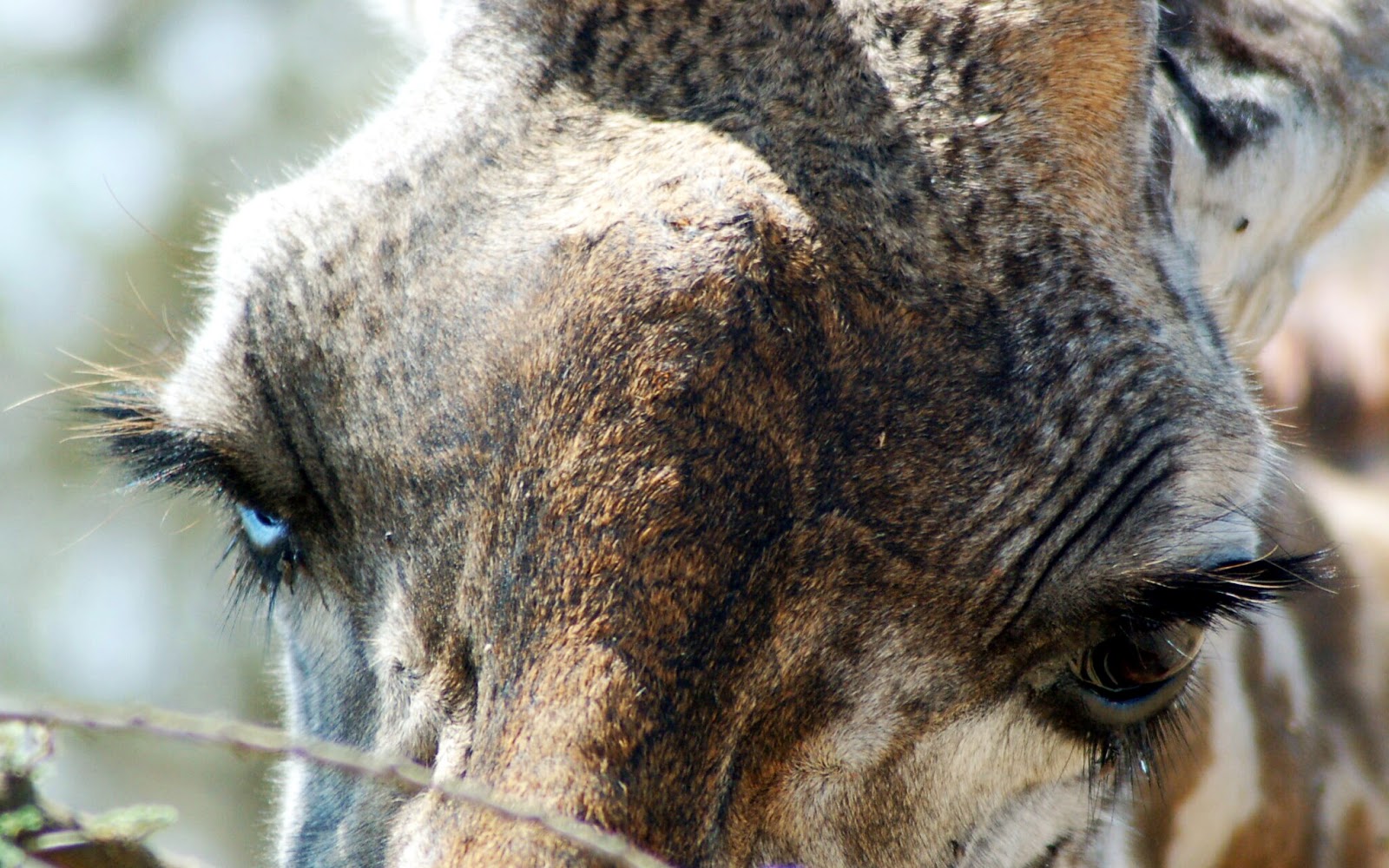
Giraffe, Masai Mara Game Reserve, Kenya

Gerenuk, Serengeti Plain, Tanzania

                            Young lion, Serengeti Plain, Tanzania

Masai village children, Kenya


I am linking this post to ABC Wednesday, and suggest you drop by and check out other takes on the letter'P'...


.


Thursday, October 25, 2012

O is for Olduvai Gorge


Africa's Olduvai Gorge is considered one of the most important paleoanthropological sites in the world. It is located in the Eastern Serengeti in Northern Tanzania, within the Ngorongoro Conservation Area.


The Gorge is a long ravine, forming part of Africa's Great Rift Valley. This Rift Valley stretches from the Red Sea through East Africa to the southern end of Mozambique and is characterized by uninhabitable desert and fertile farmland, flat arid plains and steep escarpments. It is also the only major land feature on earth visible with the naked eye from the moon.

 The name is an early misspelling of Oldupai Gorge, which was adopted as its official name in 2005. Oldupai is the Masai word for the wild sisal that grows there.

Over time, a series of fault lines, along with centuries of erosion, has revealed fossils and remnants of early humankind in Olduvai Gorge, which have been instrumental in furthering the understanding of human evolution.


Excavations in the early twentieth century by the famous archaeologist, Dr Louis Leakey, uncovered some of the earliest remains of fossil hominids at Olduvai. 

Seventeen years after the first discovery of human forms, Leakey’s wife, Mary, discovered the unmistakable fossilized footprints of a human ancestor who had walked along a riverbank three million years ago.


Skull of extinct giraffe


Since then, excavators 
working in Olduvai have 
found skeletal remains 
of a number of 
ancient hominids, 
including Homo habilis, 
Homo erectus and 
Australopithecus Boisei.


The Monolith


This archaeological evidence convinced most paleontolgists that humans originally evolved in Africa, and led to Olduvai Gorge being dubbed "The Cradle of Mankind'.


We came upon Olduvai in 2006  as we made our way from the Masai Mara in Kenya to Tanzania's Serengeti. 

When our driver stopped at a small, shabby museum, we were surprised by its simplicity...it  
seemed an unlikely holder of this area's rich history.


 Seated on small benches overlooking the Gorge, we listened attentively as a native guide explained the significance of the site.
It was only when we were leaving that I realized not all in our group were impressed. The two twenty-something girls with us rolled their eyes in boredom and asked why we'd stopped to look at "a big hole in the ground". Having never heard of the Leakey family or of Olduvai Gorge, and being unable to follow the guide's broken English, it must have seemed an odd thing to be sitting there, indeed.


Never underestimate the importance of context!


We shared our picnic lunch with a number of tiny birds that occupy the site.


I am linking this post to ABC Wednesday, and suggest you drop by and check out other takes on the letter'O'...


.

Wednesday, October 17, 2012

N is for Nile


After our East African safari a few years, we flew up to Egypt for a week. We had chosen July to visit Kenya as it is winter in the southern hemisphere. The weather was balmy and beautiful without getting excessively hot.
Had we been thinking straight, we would have realized that going to Egypt at that same time - the height of summer in the Northern Hemisphere - was a dreadful idea for someone like myself who dislikes the heat. With temperatures hitting well over  40 degrees Celsius, and higher again in places like the Valley of the Kings, I was barely functional.
            In spite of the discomfort, Egypt captivated me. How could it not?
Flying from Nairobi to Cairo, we arranged a sleeper train to take us  to Aswan. After a quick flight to Abu Simbel, we boarded our small boat for the cruise to Luxor. 

Of the 82 million people who call Egypt home, the vast majority of them live along the banks of the River Nile, where the country's only arable land is to be found.
 This verdant strip covers 40,000 square kilometres, rising south of the Equator and flowing through northeastern Africa to drain into the Mediterranean Sea.


The family goats 
are nimble at 
making their 
way along the 
walls.


Many boats sail the river daily, shepherding goods and tourists from place to place.

The traditional wooden felucca is to be seen all along the length of the Nile.
As we slowly cruised the river, life on the banks went on as usual: craftsmen plied their trade, cattle went to market, women washed clothing at the river, and children played noisily along the water's edge, their joyful laughter the soundtrack for a voyage I will not soon forget. 


Entrance to the Valley of the Kings

I am linking today's post to the wonderful ABC Wednesday même.
Drop by to see more takes on the letter 'N'...